

By Chidimma Okwara,
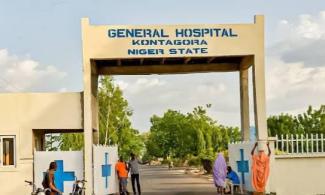
A tragic incident at the General Hospital in Kontagora, Niger State, has sparked outrage and renewed scrutiny of Nigeria’s public healthcare system. The family of Mrs. Jensen Julius, a woman who died after allegedly being left unattended for hours, has accused the hospital of gross negligence, citing the absence of medical personnel and a non-functional blood bank as contributing factors to her death.
According to reports, Mrs. Julius was rushed to the General Hospital in a critical condition on Saturday afternoon. Her family claims they arrived between 1 p.m. and 2 p.m., but were forced to manage much of her care themselves due to the lack of available staff. Despite repeated calls by nurses and relatives, the only doctor on duty—identified as Dr. Amao—was reportedly absent throughout the night.
The hospital’s blood bank was also said to be non-operational, leaving the patient without access to potentially life-saving transfusions. Mrs. Julius ultimately passed away early Sunday morning, having received no formal medical attention.
A family source said that the hospital’s failure to provide timely care amounted to “criminal negligence.” They described the experience as harrowing, with nurses unable to administer critical treatment due to the absence of a doctor and essential supplies.
“We were left to handle much of the movement and care ourselves. There was no doctor, no blood bank, nothing. It was as if we were in a ghost hospital,” the source lamented.
This incident highlights broader issues plaguing Nigeria’s healthcare infrastructure, particularly in rural and semi-urban areas. Understaffed facilities, inadequate equipment, and poor emergency response protocols continue to endanger lives. The Kontagora hospital’s failure to maintain a functional blood bank and ensure round-the-clock medical coverage is emblematic of these systemic shortcomings.
READ ALSO
As public outrage grows, calls for accountability are mounting. While there has been no official statement from the Niger State Ministry of Health at the time of writing, similar cases in the past have led to internal investigations and disciplinary actions. Civil society groups are urging the government to conduct a thorough probe and implement reforms to prevent future tragedies.
The story has ignited a wave of criticism on social media, with many Nigerians sharing their own experiences of neglect in public hospitals. Health advocates are demanding better funding, improved oversight, and stronger enforcement of medical duty protocols.
This heartbreaking case serves as a stark reminder of the urgent need to revamp Nigeria’s healthcare system. For Mrs. Julius and countless others, the cost of neglect is measured in lives lost.
If you’d like, I can help draft a petition or advocacy letter to local health authorities or lawmakers.