
By Noye Okonkwo,
Speculation is escalating within Nigeria’s security circles following unconfirmed reports suggesting a significant increase in the number of military officers detained over an alleged coup plot, with some sources claiming the total figure now exceeds 40. This reported surge in arrests comes despite repeated and vehement denials from the military high command, which insists the detentions are purely disciplinary.
The Conflicting Narratives
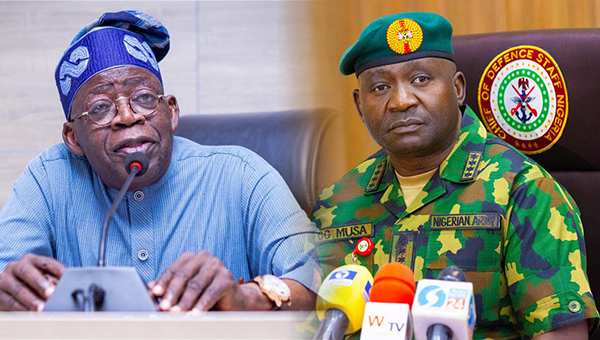
Reports circulating in the local media, particularly from outlets like Sahara Reporters and Premium Times, first brought the allegations to light, claiming that at least 16 officers were initially arrested for planning to overthrow President Bola Tinubu‘s administration. The narrative suggested a serious threat to Nigeria’s civilian rule, prompting immediate concern given the country’s history of military juntas.
However, the Armed Forces of Nigeria (AFN), through the Director of Defence Information, has repeatedly dismissed the coup claims as “entirely false.”
Investigators Trace Funds to Former Governor, Minister.
Insiders revealed that a substantial amount of money was traced to the suspected network behind the alleged plot. Collaboration among the Financial Intelligence Unit (FIU), the Economic and Financial Crimes Commission (EFCC), and other agencies reportedly linked the funds to a former governor who also served as a minister of state.
Sources noted that the detained officers have been cooperating with investigators, providing details of their recruitment and planned roles.
Although the Defence Headquarters has not officially commented on the latest arrests, sources said the military is keeping the matter under wraps pending the conclusion of investigations.
According to the sources, security agencies are analysing communication exchanges among the suspects, raising the possibility of further arrests as the investigation deepens.
Investigations by TheLeadWay confirmed that the first group of 16 officers in custody includes:
1 Brigadier General
1 Colonel
4 Lieutenant Colonels
5 Majors
2 Army Captains
1 Lieutenant Commander (Navy)
1 Squadron Leader (Air Force)
1 Army Lieutenant
Their names were given as:
Brigadier General Musa Abubakar Sadiq (Nasarawa, 44th Regular Course)
Colonel M.A. Ma’aji (Niger, 47th Course)
Lt Col S. Bappah (Bauchi, 56th Course)
Lt Col A.A. Hayatu (Kaduna, 56th Course)
Lt Col Dangnan (Plateau, 56th Course)
Lt Col M. Almakura (Nasarawa, 56th Course)
Major A.J. Ibrahim (Gombe, 56th Course)
Major M.M. Jiddah (Katsina, 56th Course)
Major M.A. Usman (FCT, 60th Course)
Major D. Yusuf (Gombe, 59th Course)
Major I. Dauda (Jigawa, DSSC 38)
Captain I. Bello (DSSC 43)
Captain A.A. Yusuf
Lieutenant S.S. Felix (DSSC)
Lieutenant Commander D.B. Abdullahi (Navy)
Squadron Leader S.B. Adamu (Air Force)
Most of the officers, sources said, belong to the Infantry Corps, Signals Corps, and Ordnance Corps.
The Official Military Position
Office of Director of Defence Information, said at the time that the arrests emerged from a routine military exercise, revealing that the officers’ grievances were linked to career stagnation and repeated failures in promotion examinations.
The AFN maintains that the ongoing arrests are not related to any attempt to destabilize the government but are instead a “routine internal process” aimed at maintaining discipline and professionalism. The military stated that investigations into the matter revealed the officers’ grievances stemmed largely from perceived “career stagnation” caused by repeated failure in promotion examinations and other related issues of “indiscipline.”
The military leadership has framed the internal actions as necessary housekeeping to ensure the integrity of its command structure and discourage unprofessional conduct among its ranks.
Despite the official denial, the persistent reports of continuous arrests—now reportedly exceeding 40 and involving the detention of additional officers—have fueled public skepticism and calls for greater transparency.
The increase in detention figures, whether they are tied to a coup plot or to a large-scale disciplinary crackdown, highlights significant underlying issues within the military structure, such as low morale or systemic problems related to promotions and welfare.
Nigeria, which returned to democratic rule in 1999, has been sensitive to coup threats, particularly following a series of military takeovers across West Africa in recent years. The current administration and security agencies are thus under pressure to clearly communicate the scale and nature of the situation to prevent panic and restore public confidence in the armed forces’ commitment to democratic governance.