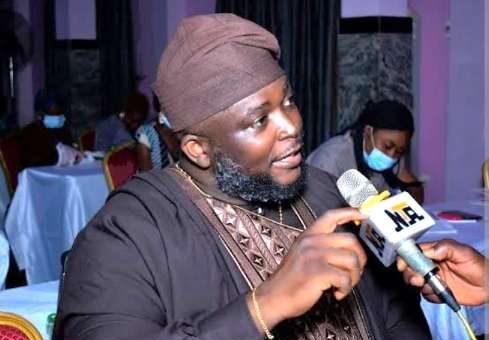


By Engr. Victor Ojimadu, CG ( IRM )
As the tenure of the current Chairman of the Independent National Electoral Commission (INEC), Professor Mahmood Yakubu, draws to a close, attention is firmly fixed on the process of appointing his successor. In Nigeria, the President currently holds the power to nominate the INEC Chairman, subject to confirmation by the Senate and consultation with the Council of State.
However, this method of appointment is fundamentally flawed and poses a significant risk to the independence and impartiality of the nation’s electoral umpire. For democracy to truly flourish, the President’s role in this critical selection must and should be reformed.
The primary argument against presidential appointment is that of the inherent conflict of interest. The President, as the leader of a political party and often a participant in the elections, should not have the unilateral power to choose the referee for a contest in which he or his party is a key contestant. This dynamic creates a system of political and institutional capture.
An INEC Chairman appointed solely by the President may be perceived, or pressured, to owe allegiance to the appointee rather than to the Constitution and the Nigerian people. This severely undermines the public’s confidence in the commission’s ability to be an impartial arbiter.
Recent history shows that presidential nominations have occasionally been a controversial one, with nominees having clear partisan leanings or close ties to the ruling party. Such appointments—even if the individuals are competent—raise doubts about their ability to conduct elections with the required neutrality.
In a football match, a team with the referee on its side always comes out triumphantly. So when the public suspects the referee is an ally of one team, faith in the entire electoral process is severely diminished. This will always lead to increased political tension, a decline in voter participation, and a greater reliance on the courts to resolve election disputes, rather than accepting the verdict of the ballot box as seen in the last general election.
SEE ALSO
This always promotes wide accusations of sectional or partisan bias based.
It is time we had an electoral reform
A Call for Electoral Reform
The transition in INEC leadership offers a crucial opportunity to implement profound electoral reforms that will strengthen democratic institution. Numerous civil society organizations, political stakeholders, and legal experts have long advocated for a change in the appointment process to ensure the INEC Chairman is truly non-partisan and of unquestionable integrity.
To safeguard INEC’s autonomy, I am of the opinion that an alternative appointment mechanism should be adopted to insulate the commission from executive interference by establishing
1) a joint committee of the National Assembly or 2) a neutral panel (perhaps drawn from civil society, judicial officers, academics) to handle the nomination, with robust public consultation. This process should involve inviting nominations and input from civil society organisations, professional bodies, and the public, followed by a transparent, televised screening process that scrutinises the nominee’s past for any political affiliation.
The reform should clearly state the criteria of “non-partisanship” and “unquestionable integrity” and it should be rigorously enforced and potentially refined. This will involve explicit prohibition of individuals with any recent or current membership in a political party, or who have served as a political aide, from being nominated.
I also recommend candidates to be invited through an open public advertisement, stakeholders should be given the room to make input, an open hearings, publication of credentials and objectives for all candidates, etc. The idea is to make the process less opaque and more participatory.
Conclusion
While the current law grants the President the power to nominate, democratic stability and the legitimacy of future elections demand a break from this tradition. Allowing the President to appoint the INEC Chairman is an anachronism that keeps the country’s democracy on a fragile footing.
A successful electoral process rests on the integrity and independence of the electoral commission. President Tinubu must act as a statesman, leveraging his executive influence to champion an amendment that permanently insulates the process from partisan control. The time for systemic reform to ensure an impartial umpire—one appointed not by a political actor, but by a truly neutral body—is now.