
By Nancy Okojie
The Deputy Speaker of the House of Representatives, Mr. Benjamin Kalu, has issued a compelling challenge to Nigerian youth, urging them to embrace digital innovation and leverage technology to drive national development and position themselves for future leadership roles ahead of the 2027 general elections.
The Deputy Speaker of the House of Representatives, Rep. Benjamin Kalu, has called on Nigerian youths to take active leadership roles in shaping the country’s democracy.
This, he said, could be achieved through digital innovation and civic participation ahead of the 2027 general elections.
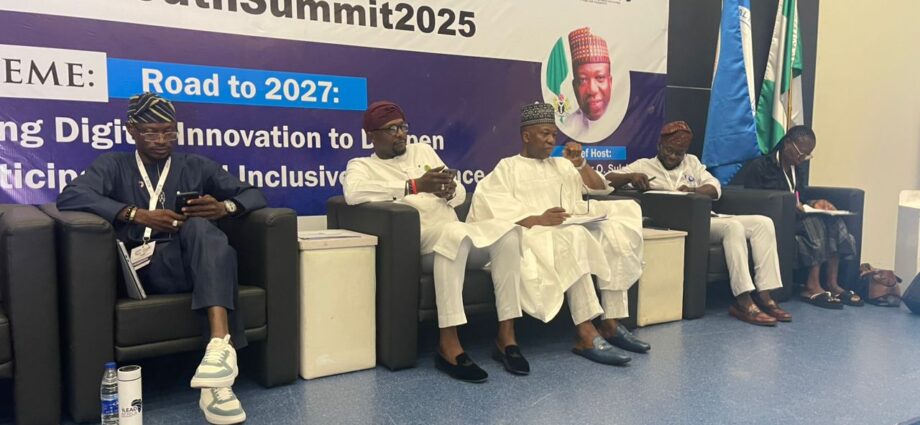
Speaking as the keynote speaker at the, an annual global conference focused on technology and innovation, Mr. Kalu delivered a message centered on the power of human capital development to transform the economy.
READ ALSO
Deputy Speaker Kalu asserted that unlocking the continent’s potential requires investment that goes beyond mere infrastructure. He argued that while vast mobile network coverage (reported to cover nearly 86% of the population) is crucial, it is insufficient on its own.
The summit had as its theme: “The road to 2027; leveraging on AI and digital innovation to deepen participation of citizen and inclusive governance.”
Kalu said that Nigeria’s future depended on harnessing its vast digital potential to build an inclusive, transparent, and technology-driven democratic system.
He said in spite of Nigeria’s projected 103 million internet users and over 205 million active mobile connections, representing 90.7 per cent of the population, the country still struggled with significant digital inequality.
“We must call for investments not just in connectivity, but in creativity and capacity,” Mr. Kalu stated. He emphasized that a more educated and skilled workforce is essential for higher productivity and effective problem-solving, which, in turn, has the potential to significantly boost the nation’s Gross Domestic Product (GDP).
Mr. Kalu drew on his personal journey to underscore the importance of initiative and courage, encouraging the youth to become proactive leaders.
“Real leadership begins when you stop waiting for permission to make a difference,” he noted. He characterized the attendees as the nation’s “coders, the innovators, the creators, and the change makers,” emphasizing that the digital tools in their hands are more powerful than anything previous generations possessed.
The Deputy Speaker’s message implicitly links digital empowerment to political influence, urging young Nigerians to boldly build their future. By mastering technology, creating solutions, and driving economic change, the youth are ultimately charting a course to assume socio-economic and political leadership, making their digital transformation efforts a direct prerequisite for meaningful participation in future events, including the 2027 polls. He pledged his office’s commitment to supporting future conferences, reinforcing the government’s interest in cultivating a digitally adept population ready to steer the nation.
“Only 45.5 per cent of our people have internet access nationally and in rural areas it’s just 23 per cent.
“This dichotomy defines our 2027 challenge: how do we build an inclusive, digitally enabled democracy when more than half of our citizens remain digitally excluded?”
“The road to 2027 is not paved with wishful thinking; it is paved with strategic action, institutional reform, and collective commitment,” he said.
He said it had become imperative to leverage digital innovation not as an end in itself but as a means to the ultimate end.