
By Samuel Okechukwu,
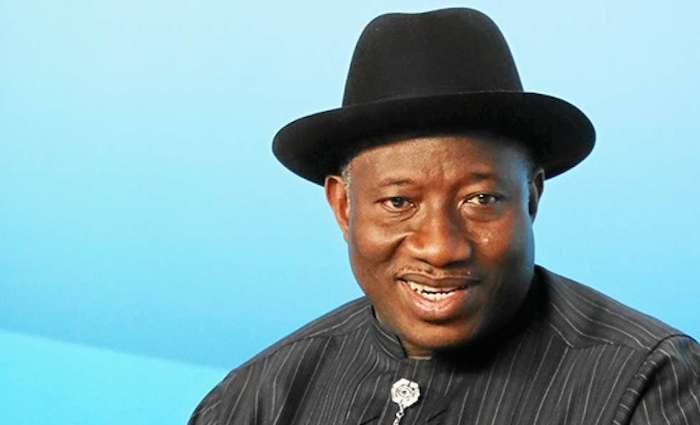
ABUJA, NIGERIA – Former President Goodluck Jonathan has offered a stark and emotional assessment of the presidential election 2025 in Guinea-Bissau, describing the aftermath of the attack as dramatically more painful for him personally than his historic 2015 presidential election defeat to Muhammadu Buhari.
Dr. Jonathan, who serves as the Economic Community of West African States (ECOWAS) Special Envoy to Guinea-Bissau, also clarified that the incident was not a conventional military coup d’état.
READ ALSO
Speaking to in an interview with Symfoni on Friday, Goodluck Jonathan described the Guinea-Bissau military intervention as as “a ceremonial coup”.
The former president said: “Specifically, what happened in Guinea-Bissau was not a coup. Maybe, for want of a better word, I would say it was a ceremonial coup.
“It is the president, President Umaro Embaló, that announced the coup.
“Before later, a military man came up to address the world that they were in charge of everywhere. Embaló had already announced the coup, which is strange.
“Not only announcing the coup, but Embaló, while the coup took place, was using his phone and addressing media organisations across the world that he had been arrested.
“I’m a Nigerian, and I know how heads of state are treated when there’s a coup.
Jonathan disputed the initial characterization of the event as a coup attempt. He argued that unlike recent military takeovers in the region (such as in Mali, Burkina Faso, and Guinea), the perpetrators in Guinea-Bissau were not uniformed military personnel seeking to seize the reins of government.
Instead, Jonathan aligned with President Embaló’s assessment that the attackers were heavily armed mercenaries, potentially linked to drug trafficking cartels, whose primary objective was the assassination of the President and his cabinet members rather than a political takeover.
In a moment of striking candor, the former President utilized his own most notable political setback to illustrate the severity of the violence he witnessed in Bissau.
Jonathan’s 2015 election loss to Muhammadu Buhari was a watershed moment for Nigeria, marking the first time an incumbent president lost re-election and peacefully conceded power. Despite the immense personal and political weight of that defeat, Jonathan stated that the carnage in Guinea-Bissau affected him more deeply.
He described visiting the scene of the attack and seeing the bloodstains of the security operatives who were killed defending the palace.
“When I lost the election in 2015, I felt pain, but the pain I felt when I went to Guinea-Bissau and saw the bloodstains of innocent people that died was more painful than losing that election,” Jonathan was quoted as saying.
Also, Dr. Goodluck Jonathan demanded the release of Fernando Dias, the opposition candidate. He stressed that Dias had “not committed any offence”.
He emphasized that election losses, while difficult, are political events, whereas the senseless slaughter of human lives during the attack in Bissau was a profound tragedy.
President Embaló later described the assault as a “failed attack against democracy” orchestrated by “drug traffickers and mercenaries” seeking to destabilize the country, which has historically been used as a transit point for the international drug trade.
Jonathan’s comments underscore the fragile security situation in West Africa and ECOWAS’s ongoing concerns regarding both military coups