

By Gbenga Oresanya,
In a dramatic climax to weeks of youth-led anti-government protests, Colonel Michael Randrianirina, commander of an elite army unit, was sworn in as the President of Madagascar on Friday. The ceremony formalized a military takeover that saw former President Andry Rajoelina flee the Indian Ocean island nation and subsequently impeached by lawmakers.
The swearing-in, held at the High Constitutional Court in the capital, Antananarivo, was attended by military officers, politicians, and representatives of the “Gen Z Madagascar” protest movement who spearheaded the uprising. Randrianirina’s rapid ascent marks the country’s latest episode of political instability and its third military-backed power transition since gaining independence from France in 1960.
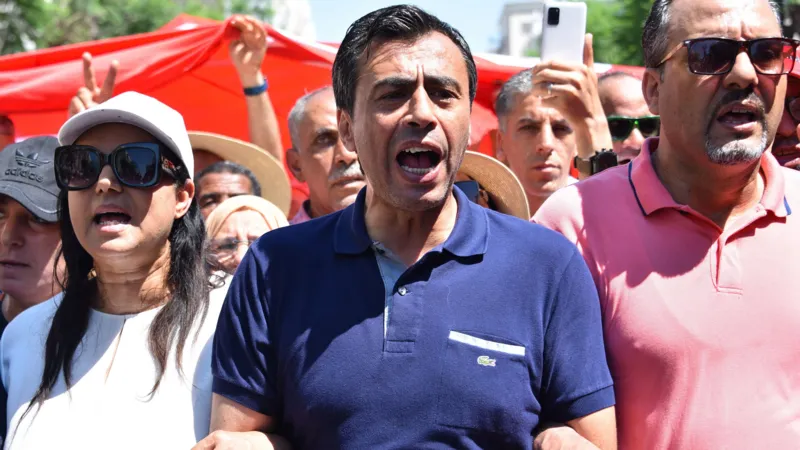
The roots of the crisis lie in deep-seated public frustration over worsening economic conditions, high costs of living, and chronic service failures, notably severe water and power shortages. These grievances fueled a potent protest movement, largely driven by disenfranchised young people mobilizing under the banner of “Gen Z Madagascar.”
What began as demonstrations against utility cuts quickly snowballed into a widespread call for Rajoelina’s resignation, with protesters citing alleged corruption and a lack of economic opportunity. The situation escalated rapidly when Rajoelina’s government attempted a harsh crackdown. This proved to be the pivotal moment.
READ ALSO
Colonel Randrianirina, the commander of the elite CAPSAT army unit (the same unit instrumental in Rajoelina’s 2009 coup), broke ranks. His unit refused orders to fire on protesters and instead joined the anti-government movement. With the military defecting and lawmakers voting to impeach him for desertion of duty, Rajoelina fled the country, claiming he feared for his life.
A ‘Transitional’ Rule and International Alarm
Taking the oath, Colonel Randrianirina was quick to address the mounting international criticism. He insisted that the takeover was not a coup d’état, pointing to the High Constitutional Court’s decision to invite him to serve as head of state to “avoid anarchy and disorder.”
During his inaugural speech, Randrianirina pledged to break with the nation’s tumultuous past and committed to a process of national renewal. He announced that a military-led committee would oversee a transitional government made up of civilians for a period of 18 to 24 months. During this time, he promised to collaborate with political forces and civil society to draft a new constitution and organize fresh elections and referendums.
Despite these promises, the military takeover has drawn sharp international condemnation. Both the United Nations and the African Union (AU) rejected the unconstitutional change of government, with the AU suspending Madagascar’s membership. Critics noted the irony that Rajoelina, who himself first came to power through a military-backed coup in 2009, was now ousted by the same mechanism.
Madagascar, a nation with a young population and vast natural resources (including vanilla, nickel, and sapphires), remains one of the world’s poorest countries. As Colonel Randrianirina takes the reins, the immediate challenge for the new administration will be to manage the immediate humanitarian fallout of the protests and to convince a skeptical international community and a hopeful, yet wary, young population that this transition will truly lead to lasting stability and democratic reform.