
By Chidimma Okwara,
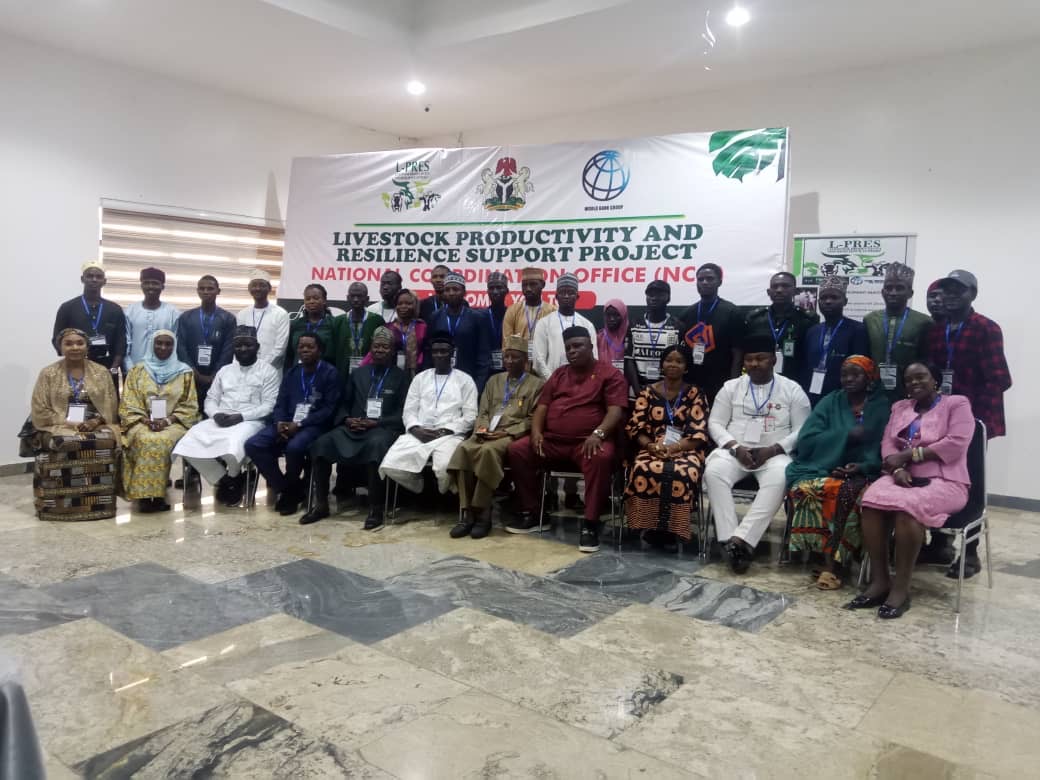
The World Bank-assisted Livestock Productivity and Resilience Support Project (L-PRES) has trained 80 professionals from across Nigeria on livestock disease control and surveillance. The training is a key part of the project’s strategy to enhance livestock health and productivity nationwide.
The training, which drew participants from the 36 states and the FCT, also focused on awareness creation, risk management and strengthening national response to livestock diseases
SEE ALSO Experts urge use of AI to strengthen agriculture, energy resilience in Africa
NIMR’s GMTP, homegrown solution to solving Nigeria’s health challenges
Overview of the Training: The training brought together one veterinary doctor and one para-veterinarian from each of Nigeria’s 36 states and the Federal Capital Territory (FCT). The goal was to equip these frontline professionals with modern skills in disease detection, containment, and risk communication. The initiative aims to strengthen Nigeria’s capacity to respond to crises in the livestock sector by improving diagnostic capabilities, fostering collaboration among professionals, and promoting community engagement.
Dr Sanusi Abubakar, National Project Coordinator (NPC) of L-PRES, said on Friday in Abuja that the workshop brought together a crucial group of frontline professionals whose work directly impacts livestock health and productivity nationwide.
Abubakar, represented by Dr Mustapha Mohammad, National Animal Health Specialist of L-PRES, said the exercise was aligned with the Project Development Objective (PDO) of improving productivity and commercialisation of targeted value chain production systems.
L-PRES Project and Its Objectives: L-PRES is a six-year, World Bank-supported project with a development objective to improve livestock productivity, resilience, and commercialization of targeted value chains. It also aims to strengthen the country’s capacity to effectively respond to eligible crises or emergencies. The project’s approach is multi-faceted and includes:
- Strengthening National Livestock Institutions: Improving service delivery and creating an enabling environment for both public and private sector operators.
2. Enhancing Value Chain Performance: Boosting the participation of smallholder farmers and other private sector players in selected value chains like cattle, sheep, goats, and poultry.
3. Crisis Prevention and Management: This is where the recent training falls. This component focuses on improving the government’s ability to respond to livestock crises, mitigating conflicts between pastoralists and sedentary producers, and enhancing the national laboratory network.
The training directly aligns with the third component of the L-PRES Project Appraisal Document, which is dedicated to animal health services. Key areas of focus under this component include:
- Antimicrobial resistance (AMR) control.
- Vaccination against transboundary animal diseases (TADs).
- Border surveillance.
- Strengthening “One Health” platforms, which recognize the interconnectedness of human, animal, and environmental health.
Importance of the Training: Livestock is crucial to Nigeria’s economy, providing economic stability to rural households and serving as a hedge against inflation. However, the sector is plagued by recurrent disease outbreaks, such as Anthrax, Contagious Bovine Pleuropneumonia (CBPP), and African Swine Fever. These diseases disrupt production and trade, threaten food security, and significantly impact the livelihoods of millions of farmers.
By training professionals at the local level, L-PRES aims to address critical gaps in early disease detection, reporting, and coordinated response. This will not only reduce animal mortality and morbidity but also ensure the long-term sustainability and commercial viability of the livestock sector. Sources