
The world of technology has always been a hotbed for wealth creation, but the recent boom in artificial intelligence has ignited a new gold rush. As AI permeates every sector from healthcare to entertainment, it has minted a fresh class of billionaires who are not just shaping the future of technology but also amassing staggering fortunes.
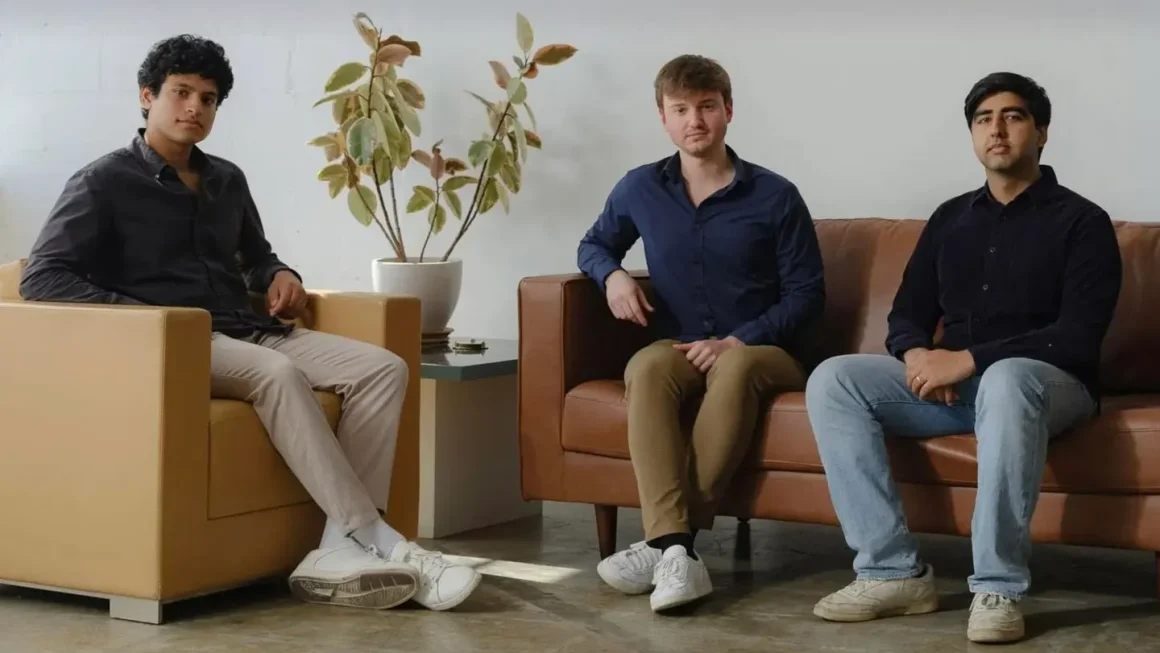
The AI arms race, prompted by ChatGPT’s release in 2022, is in full swing. Investor excitement, new large language model releases and a growing list of business applications for AI have pushed up tech valuations—and minted a batch of new billionaires. The seven former OpenAI employees who left to cofound Anthropic in 2021 are now billionaires, thanks to a massive $3.5 billion funding round at a $61.5 billion valuation, announced in March.
- See Also Top 10 billionaires in Asia: how their net worth has grown – or dropped – this year
- World’s Billionaires List
Elon Musk’s xAI raised $6 billion at a $50 billion valuation in December. (After we locked in net worths for the list, Musk merged xAI and X, formerly Twitter, in a late March deal valuing the latter at $80 billion.) And DeepSeek, founded by Chinese hedge fund manager and new billionaire Liang Wenfeng, took the world by storm with the release of its R1 reasoning model in January—claiming it’s cheaper to train yet still rivals the performance of OpenAI’s latest models. On the business applications side: translation services entrepreneur Phil Shawe of TransPerfect, Duolingo cofounders Luis von Ahn and Severin Hacker, and AI game creator Yao Runhao have gone all-in on AI and reached billionaire status in the process.
Here is a look at some of the most prominent AI tech billionaires and the innovations that have propelled them to the top.
11. Liang Wenfeng
Net Worth: $1 billion | Source of Wealth: AI, hedge fund | Citizenship: China
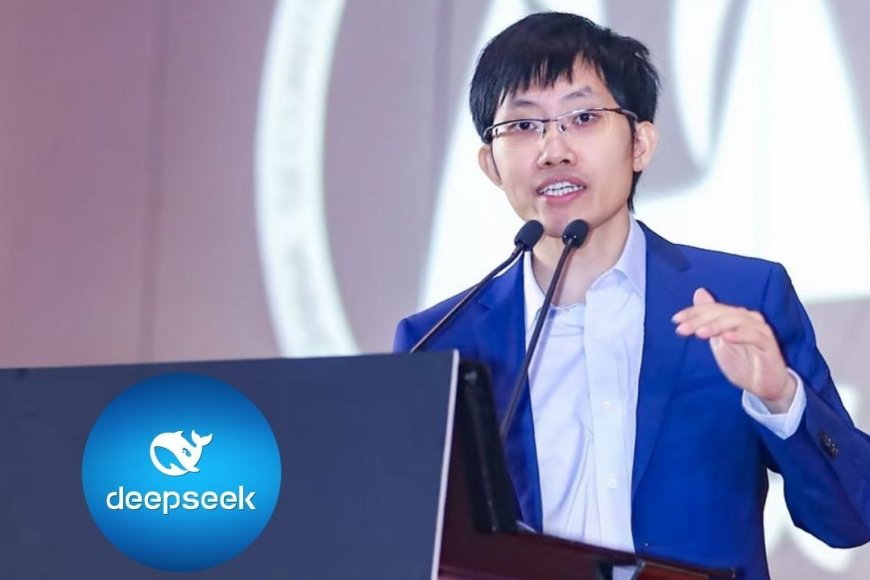
The CEO of DeepSeek, Liang Wenfeng made headlines by creating a large language model that rivaled competitors like ChatGPT while being significantly more cost-effective. His focus on efficiency and innovation has earned him a fortune and established him as a rising star in China’s AI scene.
His AI firm DeepSeek took the world by storm when it released its latest model in January. Liang, who hasn’t taken on any outside investors, funded DeepSeek in part with his profits from High-Flyer Capital Management, the quantitative trading hedge fund he cofounded in 2015 with two college classmates.
10. Sundar Pichai
Net Worth: $1.1 billion | Source of Wealth: Google | Citizenship: United States

Sundar Pichai from Chennai, India native, who has served as CEO of Google’s parent company Alphabet since 2019 owns just 0.02% of its stock. But with shares surging nearly 30% over the last year to a record high, thanks in part to Google’s new AI model Gemini 2.0, that’s enough to make him a billionaire for the first time—when combined with his hundreds of millions in (pre-tax) share sales.
9. Luis von Ahn, Severin Hacker
Net Worth: $1.1 billion (each) | Source of Wealth: Duolingo | Citizenship: United States (von Ahn); Switzerland (Hacker)

More than 100 million people use their Duolingo app each month to learn 40-plus languages, from Arabic to Yiddish. Born to a single mother in Guatemala City, Luis von Ahn came to the U.S. to study at Duke and Carnegie Mellon, where he became a professor, invented the CAPTCHA online verification system, then launched Duolingo with his Swiss grad student, Severin Hacker in 2011—three years before Hacker finished his PhD program.
8. Dario Amodei, Daniela Amodei, Tom Brown, Jack Clark, Jared Kaplan, Sam McCandlish, Christopher Olah
Net Worth: $1.2 billion (each) | Source of Wealth: Anthropic | Citizenship: United States; Canada (Olah)

Dario Amodei, a former OpenAI vice president, co-founded Anthropic with a distinct mission: to build safe and reliable AI systems. His company’s focus on “Constitutional AI” and ethical principles has resonated with investors, leading to a soaring valuation.
Anthropic, which created ChatGPT competitor Claude, raised $3.5 billion at a $61.5 billion valuation in March. CEO Dario Amodei cofounded the company in 2021 with his sister, Daniela, and five others; all seven came from OpenAI and are now billionaires, including a former Bloomberg journalist Clark and a theoretical physics professor Kaplan.
Amodei’s fortune proves that a strong emphasis on responsibility and human alignment in AI development can be both impactful and highly profitable.
7. Yao Runhao
Net Worth: $1.3 billion | Source of Wealth: Online games | Citizenship: China
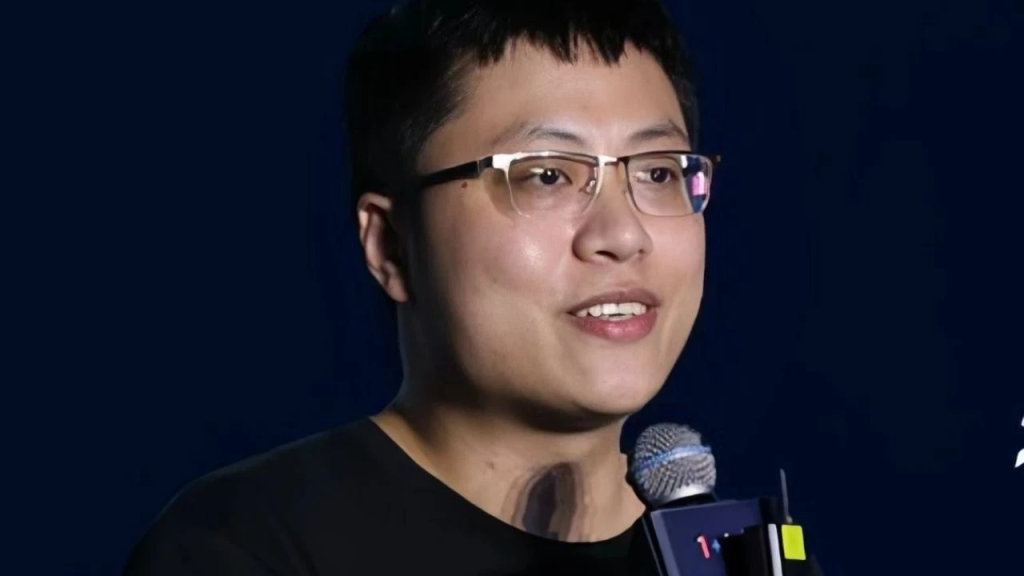
As the CEO of Paper Games, Yao Runhao has shown the creative potential of AI in entertainment. His AI-powered interactive dating game, Love and Deepspace, attracts millions of users, demonstrating how AI can be used for immersive storytelling and human-like interaction.
Roughly six million people play Yao’s popular AI dating simulation game Love and Deepspace each month. Launched in January 2024, it already accounts for over 80% of his privately held Shanghai studio Paper Games’ $850 million in revenue. An avid gamer since he was a kid, Yao and his now-wife once launched a mobile fashion game together.
6. Phil Shawe: The Quiet Innovator
Net Worth: $1.8 billion Company/Role: Co-CEO, TransPerfect Key Contribution: AI-driven translation services | Citizenship: United States
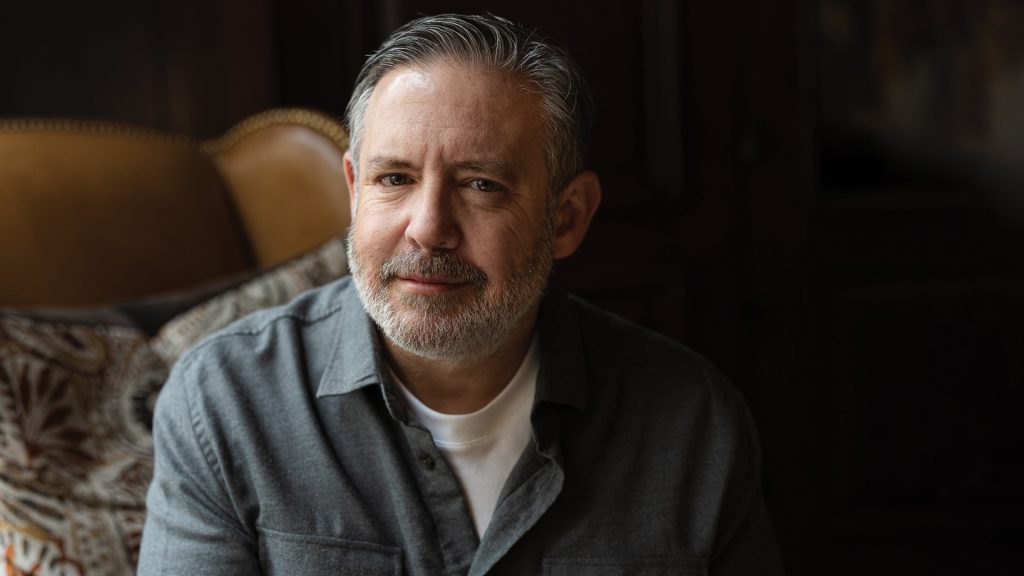
Phil Shawe‘s path to AI billionaire status is a testament to the technology’s ability to transform traditional industries. Shawe and his girlfriend co-founded TransPerfect, a translation and localization company, from an NYU dorm room in 1992. By strategically integrating AI-powered language processing, he scaled the business into a global powerhouse.
After a messy corporate battle lasting more than three years, a Delaware judge approved Shawe’s buyout of his former fiancée and co-CEO in 2018 due to the “complete dysfunction” between the pair. Today, the $1.3 billion (2024 revenue) AI-powered outfit counts Microsoft and the Department of Justice among its clients.
Shawe’s success story illustrates that not all AI wealth is generated by flashy consumer applications. Instead, it can come from leveraging AI to enhance and optimize existing business models, providing immense value in industries where accuracy and efficiency are paramount.
5. Sam Altman: The Face of Generative AI
Net Worth: $1.9 billion Company/Role: CEO, OpenAI Key Contribution: Generative AI leadership
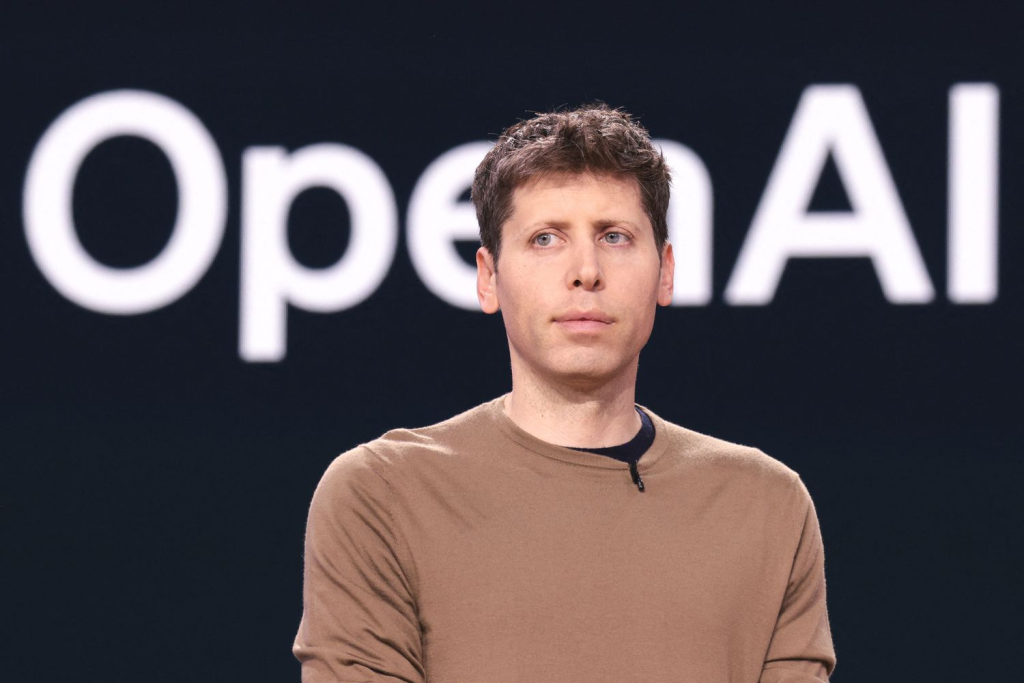
Sam Altman is arguably the most recognizable figure in the AI world, largely due to his role as the CEO of OpenAI, the company behind ChatGPT. While he doesn’t hold equity in OpenAI, his personal fortune comes from savvy early-stage investments in companies like Stripe and Reddit, as well as the sale of his previous startup, Loopt.
Altman’s influence extends far beyond his net worth. His leadership at OpenAI has brought generative AI into the mainstream, sparking global conversations about the technology’s potential and its societal implications.
4. Joe Lonsdale
Net Worth: $2 billion | Source of Wealth: Tech investments, Palantir | Citizenship: United States

A onetime PayPal intern, longtime Peter Thiel disciple and big time Trump backer, the Palantir cofounder is a billionaire after the data mining firm’s shares soared 225% over the past year. Joe Lonsdale also cofounded government budgeting tool OpenGov, which sold a majority stake to Cox Enterprises at a $1.8 billion valuation in February 2024.
3. Alexandr Wang: The Data King
Net Worth: $2.7 billion | Source of Wealth: Artificial intelligence | Citizenship: United States

The youngest self-made billionaire in the world, at age 28. At just 26, Alexandr Wang is a prime example of a young, self-made AI billionaire. The New Mexico native landed full time engineering jobs in Silicon Valley at age 17, with fintech Addepar and then question-and-answer site Quora. At 19, Wang dropped out of MIT after a brief stint studying machine learning to attend the Y Combinator accelerator and launch Scale and then founded Scale AI at the age of 19. His company tackles a fundamental, yet often overlooked, aspect of AI: data labeling. AI models are only as good as the data they are trained on, and Scale AI provides the high-quality, annotated data that major tech companies like Google and Meta need.
His Scale AI—which does data labeling for AI juggernauts including OpenAI, Google and Meta—raised $1 billion at a nearly $14 billion valuation in May 2024.
Wang’s success demonstrates that fortune in the AI space isn’t limited to building the most advanced models; it can also be found in providing the critical infrastructure that allows those models to function effectively.
2. Michael Intrator, Brian Venturo, Brannin McBee, Jack Cogen
Net Worth: $3.1 billion (Intrator), $2 billion (Venturo), $1.5 billion (McBee), $1.2 billion (Cogen) | Source of Wealth: Cloud computing | Citizenship: United States

The CEO of CoreWeave, Michael Intrator and his co-founders pivoted from cryptocurrency mining to providing high-performance cloud computing services for AI startups. Their foresight to capitalize on the GPU demand for AI training has made them billionaires.
The CoreWeave CEO initially stockpiled Nvidia chips to mine cryptocurrency. In 2019, the trio shifted to selling computing power, and now serves both small startups and large firms like Microsoft. Their firm raised $1.1 billion from private investors at a $19 billion valuation in May 2024 and went public on March 28. (Net worths above are as of March 7, the day we locked in valuations and share prices for our billionaires list; CoreWeave ended its first day of trading at an approximately $23 billion valuation, around the same value as in CoreWeave’s private share sale last October.)
1. Jensen Huang: The Architect of AI Infrastructure
Net Worth: $113 billion Company/Role: CEO and Co-founder, Nvidia Key Contribution: Hardware for AI
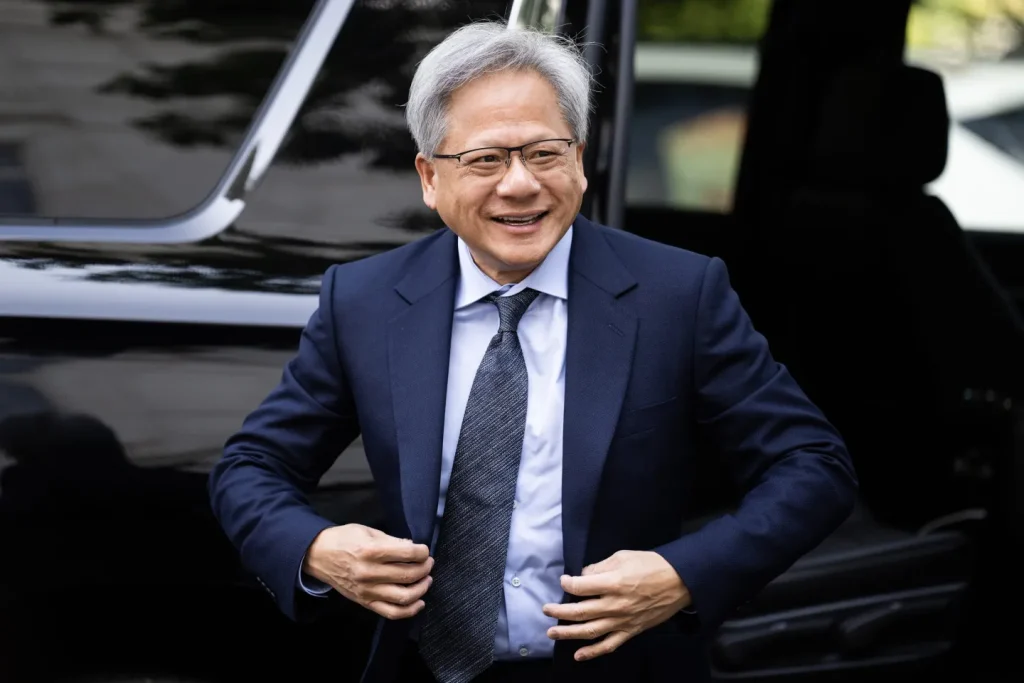
No individual better embodies the AI wealth explosion than Jensen Huang. His company, Nvidia, initially known for its graphics processing units (GPUs) for gaming, has become the indispensable engine of the AI revolution. As the demand for computing power to train large language models and other complex AI systems skyrocketed, Nvidia’s GPUs became the de facto standard.
In 2025, Nvidia reached a monumental $4 trillion valuation, and with his significant stake in the company, Huang’s net worth has soared, placing him among the world’s wealthiest individuals. His vision transformed Nvidia from a niche hardware company into the central nervous system of the global AI ecosystem.
The rise of these billionaires is a clear indicator of AI’s transformative power. From the hardware that powers the systems to the data that trains them, and from the groundbreaking models themselves to the applications that bring them to life, every facet of the AI ecosystem is creating immense value and rewriting the rules of wealth in the 21st century.